-
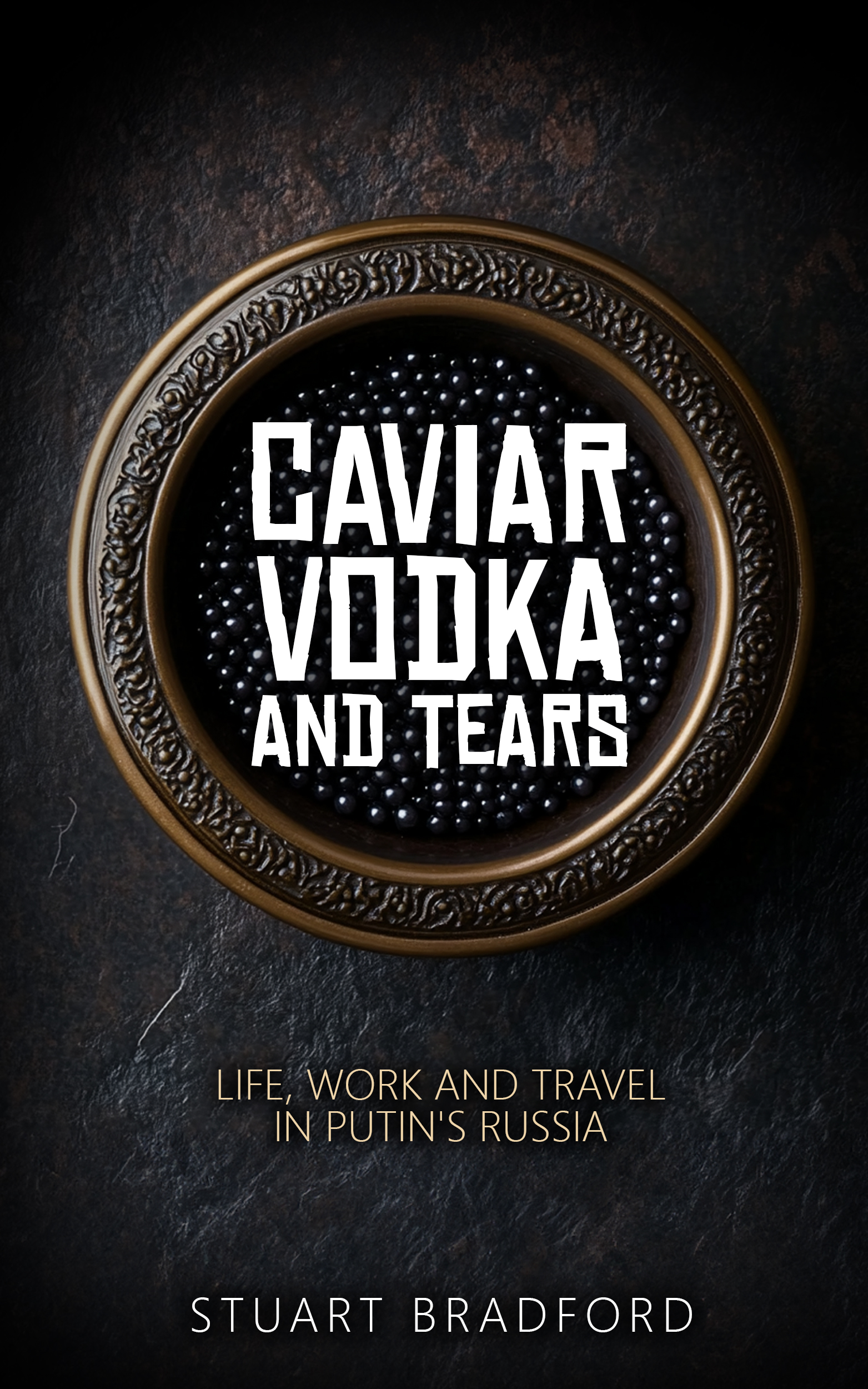
Welcome to the launch site of my first book, Caviar Vodka and Tears.
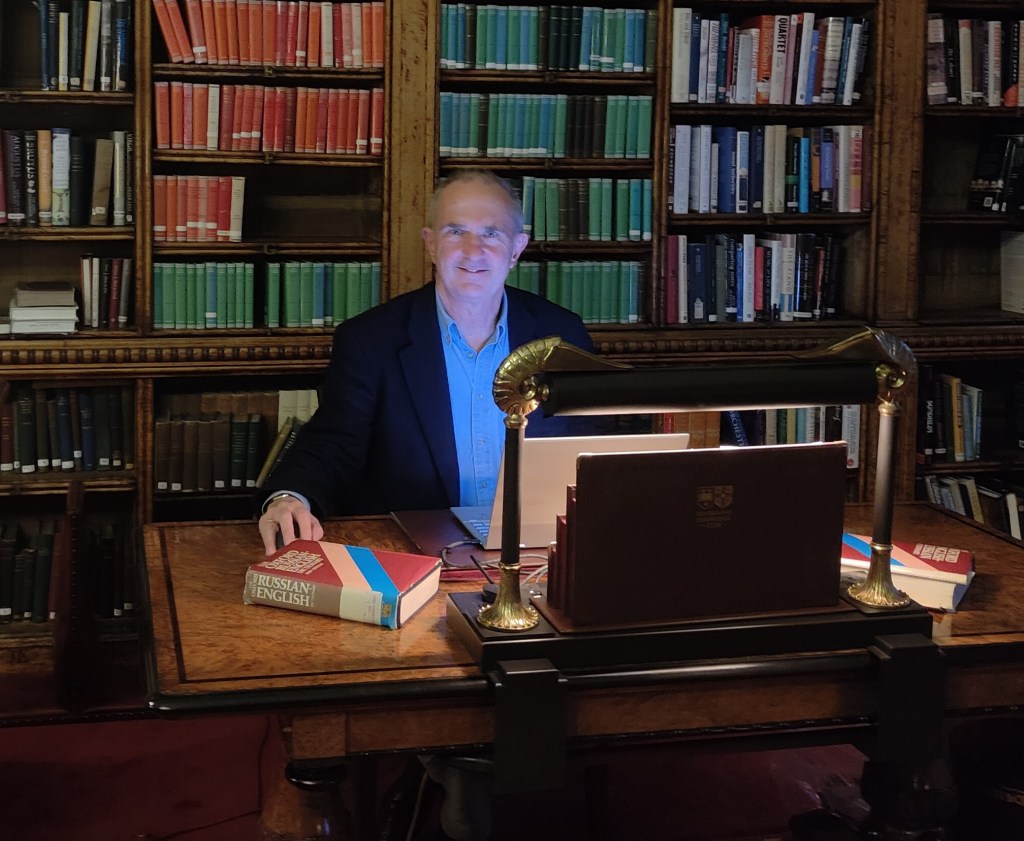
Find out more about the book, about me, and about Russia.
Caviar Vodka and Tears
by Stuart Bradford
About the Book
Partying until sunrise, baptism under ice, dead bodies on the street, treachery in business dealings – everyday life for an expatriate working in Russia.
Caviar, Vodka and Tears recounts the joys and frustrations of life and work in Russia over the period 2008 to 2022, through the eyes of the fictitious expatriate Keller family. The Kellers establish many deep friendships with ordinary Russians, and have many extraordinary adventures.
Keller’s business ventures meet initial success but become harder as relations with the West worsen, and end in treachery and apparent disaster. However, when the conflict in Ukraine erupts in 2022, his failure is revealed as a godsend, and Keller is forced to reassess his past role in developing Russia’s energy industry.
Caviar Vodka and Tears is entertaining and informative reading for anyone trying to better understand contemporary Russia.
Blank spacer text here
An Extract from the Book
Although I had followed the advice I had been given to sprint from the plane, I found that immigration at Sheremetyevo airport at Moscow was already crowded from previous flights. In the distance ahead of me, there were several closely spaced booths, some closed, some housing bored men or women in a pale blue uniform. The open positions had a green light above them, and the closed ones had a red X. In front of each manned booth a line of subdued, tired-looking people waited patiently. There were separate queues for Russians, which moved quickly, and foreigners, which were static. As the rest of the passengers of my flight started arriving from behind me, I made a hurried assessment of my options and took my place at the end of a line containing around forty people.
I waited. After a few minutes, far away at the front, there was the thud of a rubber stamp hitting the page of a passport, signifying that another passenger had been processed. It was as if an electric shock had been applied to the worm-like straggle of people in my line; each person looked up, their backs straightened, and hands reach down to take hold of their baggage. The lucky person at the front could now walk up to the booth to have his papers inspected, whilst the rest of us shuffled forward a few steps. The temporary animation transmitted itself to our neighbours, some of whom scanned our line for people distracted by books or headphones, who might leave a space that they could push into.
After this brief movement, the crowd settled back into its previous torpor. After half an hour of waiting, punctuated by the occasional sound of the passport stamp, I was slightly closer to the front, but none of the lines for foreigners seemed to have moved much. I measured the time taken for each passenger – about three minutes on average. There were thirty people ahead of me, so that meant a further hour and a half standing with nothing to do but stare at the thick black coat of the man directly in front of me, and periodically to pick up my bags and shuffle forward, making myself as broad as possible to discourage my neighbours from cutting in. In the dark hall, each passenger looked grey and tired, like an inanimate cog in some machine. The only spark of activity was a security guard with a large dog on a lead, who walked up and down the lines as his charge sniffed each passenger.
Although outwardly placid, I sensed that each denizen of this sad world was tense, both annoyed at the waste of their time and worried – either about losing their place or about some random event that might prolong their suffering even further. I fancied I could smell an overlay of stress on top of the odour of many tightly packed bodies, unwashed after long flights. It turned out that the worry was justified; without any warning, a red X suddenly lit up above the booth next to the one I was targeting, signalling its imminent closure. An audible groan went up from the crowd. The unfortunate people waiting in that queue shuffled across to the lines to their left or right, and it seemed to be the airport’s etiquette to let them in. There were now ten more people in front of me, and so thirty minutes longer for me to wait.
After another thirty minutes, I was half-way towards the front. I heard the thud of the passport stamp and picked up my bags in readiness to move a few paces closer my goal. But the line remained motionless; looking forward I could see that the passenger being processed was dark-skinned and seem to require many more stamps on his documents than other people. I put my affairs back down again, but a little too quickly, and heard an ominous crack emanating from my bright yellow duty-free bag. Soon after, a red liquid began to ooze out and form a pool on the floor to my right – it was the bottle of wine I was bringing as a present for our divisional secretary in the office, who had given me lots of useful advice for my first trip to Russia. The dog ran up, straining on its lead, sniffing furiously. His handler looked down at the red pool and then looked up at me. He said something in Russian – probably an instruction to clear up the mess – but I could not understand him and had no intention of leaving a position it had taken me an hour to reach. The man repeated his words, but when I looked blankly back, he moved on, hauling his dog with him. I was relieved to see that the wine had now stopped spreading and was now forming a useful barrier to protect my right flank.
Another half hour passed, and for once there was a happy event – an official went to sit in one of the closed booths. A few experienced travellers seized the opportunity and rushed forward to stand in front of her. Three of them came from my queue, which had therefore shortened by nearly ten minutes. Far to my left, another groan announced the appearance of the dreaded red X over a distant lane. I spent my last twenty minutes of waiting anxiously watching the green light above my booth, but it remained on, and finally it was my turn to stroll up and present my passport to the immigration officer. He was a pale, spotty youth, wearing an air of extreme boredom, whose blue shirt seemed too big for him. He silently took my papers without looking at me and started typing something into his computer terminal. He glanced up once to check that I resembled the photo on my passport, and then returned to his typing. Finally, he stamped my document with a heavy thud, returned my papers without looking up, and pressed a button that unlocked the swinging barrier beside his booth.
I had been admitted for the first time to a country where my family and I would spend over seven years, spread over two assignments. We would have many adventures, including being baptised under the ice of the Moscow winter, riding a horse at 2am around St Isaac’s cathedral in St Peterburg, escaping a forest fire in Siberia, and finally meeting a dead body on the street the day we left Russia. Our life in Moscow and travels around the former Soviet Union were enhanced by copious quantities of vodka and red caviar, which made celebrations with friends special or made our lowest moments more bearable. I would try to do business here, seeing first-hand the thinking of some of Russia’s top business leaders, which in turn reflected Putin’s view of the world. I had initial success, but my efforts ended in disaster and the realisation that my work would only have helped finance Russia’s actions against Ukraine.
Over the years, we fell in love with the country and its people, but not its government. However, my very first experience at the immigration hall of Sheremetyevo airport filled me dread – I had signed up for a three-to-four-year assignment and was wondering what I had let myself in for.
 Caviar, Vodka and Tears